



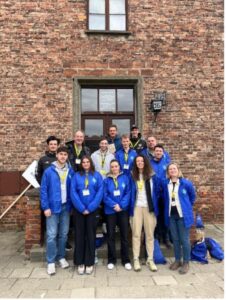
During Yom HaShoah, Maddy, our Trust EDI Officer, took part in the March of the Living 2026 representing the Club and Trust on the football bus with other football clubs and MPs. March of the Living is an educational 5-day journey in Poland, to learn about 1,000 years of Jewish life in Poland and the devastation and horrors of the Holocaust.
“I feel incredibly privileged to have spent five days in Poland, visiting significant sites, meeting inspiring people, and learning about Jewish culture and life. It has taken me a few weeks to process the trip, and I’m still finding it difficult to put into words. However, I have tried my best to capture my experience…
My educational journey began even before landing in Poland. On the plane, I was seated next to Kate Lennard, a screenwriter for the ITV film SURVIVOR, based on the life of Ivor Perl BEM. We spoke about her work and her journey in creating the film, and she kindly gave me the book it was based on, Chicken Soup Under the Tree, which I read during the flight. This felt like the perfect way to begin the journey, by understanding the experience of a survivor before visiting Krakow and Warsaw. It also reminded me how privileged I was to be part of a programme that allows me to learn from so many people taking part in the March across the country and the world.
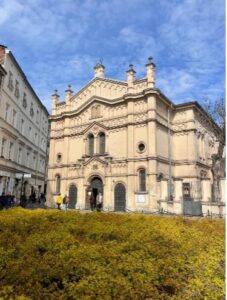
After arriving in Krakow, we visited the Kazimierz Jewish district and began learning about the rich Jewish history that existed before the Holocaust. We visited several synagogues, each different, reflecting the evolution of Jewish culture over time. We also visited the Krakow Ghetto, where thriving Jewish life in the city came to a brutal end. Standing in the square where Jewish people were gathered before being deported to the camps was an incredibly uncomfortable feeling, particularly as modern life continued around us.
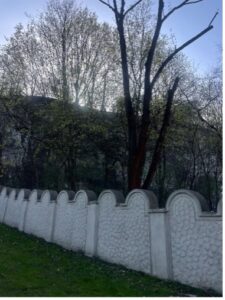
We also learned about the chemist Taduesz Pankiewicz, who was the only Pole who worked and lived in the Ghetto throughout its existence. After witnessing the brutal deportations of Jews to the death camp, his pharmacy became a meeting place, and he supplied medicine and food to help the Jewish people avoid deportation.
At the end of the first day we heard from Mala Tribich, who was forced to move into the Ghetto in her hometown in Poland. Hearing her experience after visiting the Ghetto was incredibly difficult, but profoundly important in understanding what it was like to be where we stood only 80 years ago. Mala’s story is incredible and you can hear it here: Holocaust Memorial Day 2017 Live Webcast with Mala Tribich | Videos & Movies on Vimeo
The first day gave a rich, in-depth insight into Jewish life before and at the start of the war, before continuing our journey in Auschwitz and Birkenau the following day.
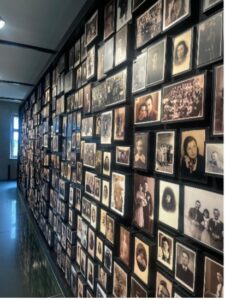
Auschwitz and Birkenau are incredibly difficult to describe. We spent the entire day learning about the horrific torture and industrial scale murder that took place at the sites, listening to many testimonies while standing in the exact places the individuals described. This was an incredibly important part of trying to comprehend the horrors carried out where we were standing. We also heard a testimony from Martin Stern MBE, on his experience of the holocaust which you can read more about here: Holocaust Memorial Day Trust | Martin Stern MBE
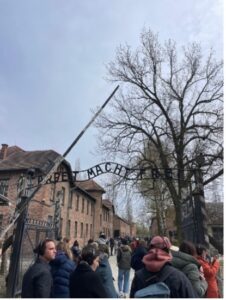
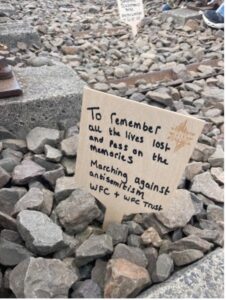
On Yom HaShoah, after two days of learning about Jewish life and destruction during the Holocaust, we took part in the March of the Living. Thousands of people walked from Birkenau to Auschwitz alongside 50 survivors. It feels impossible to put into words what this experience was like, and it wasn’t what I expected. This wasn’t just a march of remembrance; it was a pledge to continue to share the survivors’ stories, to ensure they are never forgotten, and to stand against antisemitism. I feel honoured to have been able to walk with the survivors. This is a privilege that few people will have in the future and has left me with a feeling of responsibility to share their stories and ensure they are always remembered.
The final two days were spent in Warsaw, where we visited the Treblinka extermination camp, Tykocin, and the Lopuchowo forest. At Treblinka, we heard from Barbara Maria Frankiss, who shared her personal story of surviving the Holocaust and of her grandparents who tragically died at Treblinka (Barbara Maria Frankiss). We then visited the town of Tykocin, where the entire Jewish population of 1,400 people were murdered in the Lopuchowo forest.
This was disturbing and horrifying in a completely different way to Auschwitz and Birkenau; whilst the systematic processes in those camps were horrific, the quiet emptiness of the forest forced us to imagine the repeated brutality of the murder of the entire community.
The March of the Living was an emotional, educational, incredible few days and went beyond all of my expectations. Not only did I learn about the Holocaust, but also about what it means to be Jewish. As a non-Jewish person, I felt deeply privileged to attend the Yom HaShoah ceremony and the closing ceremony, and to feel included within the Jewish community.
One aspect of the trip that struck me was the level of security throughout the trip. While I was aware of The Community Security Trust (CST) – a registered charity in the UK that protects British Jews from antisemitism and terrorism – and the need for additional protection for Jewish communities, being surrounded by constant security, flashing blue lights, and helicopters felt sometimes scary to me. For the many Jewish delegates, however, this was sadly a familiar reality. The number of antisemitic attacks globally and locally is incredibly distressing and while the Club and Trust work hard to educate staff each year, more must be done. We will continue to work with the Jewish Hornets and our wider community to support them and stand firmly against antisemitism.
A big thank you to everyone involved in the March of the Living, you can find out more about it here: marchoftheliving.org.uk